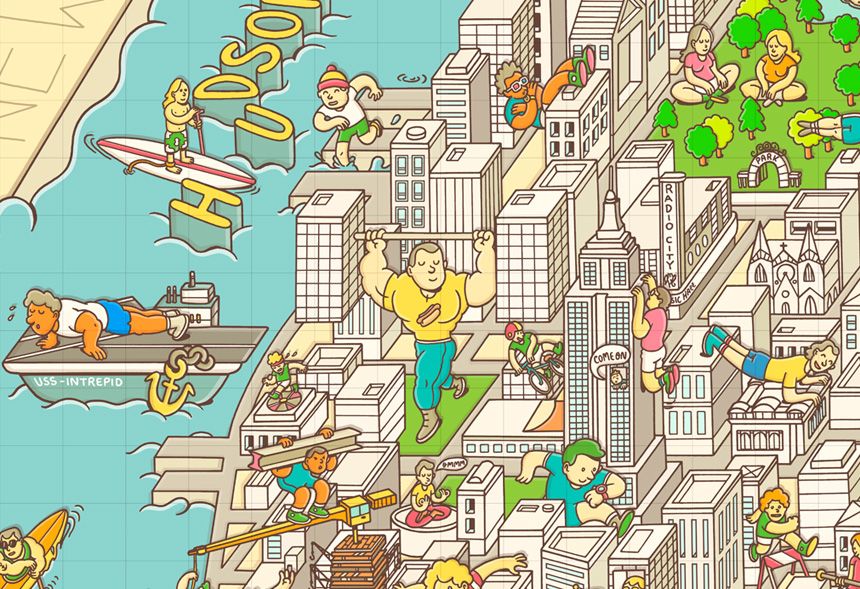
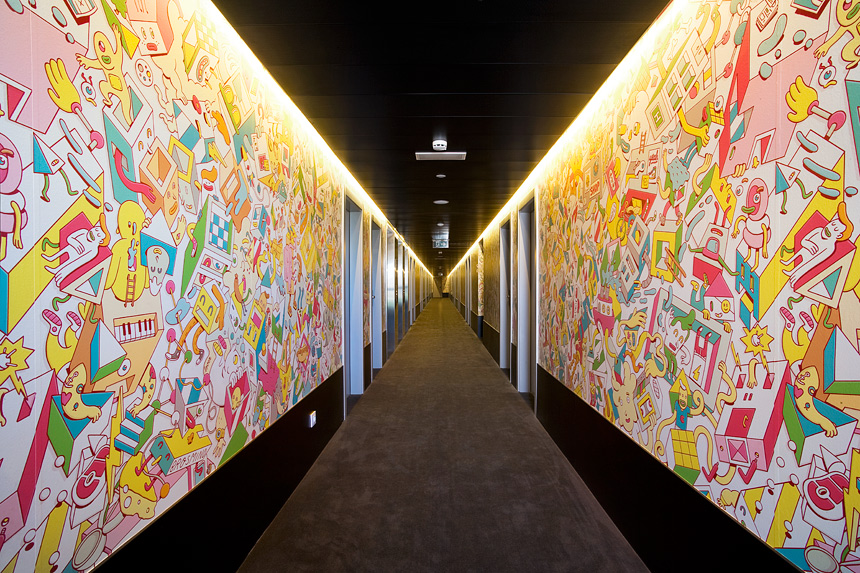
"Assembling pixel elements is about using lo-fi squares in order to create the optical illusion that the depicted images appear in new dimensions." -
Laurent Bazart.
Source: Illustration Now! 3, 2009, First Ed. Julius Wiedemann, Germany: TASCHEN. (pp. 42-43)
PIXEL:
The square pixel is the atom of digital design - only through clustering and the necessary viewing distance is it capable of stimulating curves and lines. It is this which makes the pixel, in its absolute tininess, fascinating as it demands clear decisions from the designer regarding position and selection. Designing with pixels is the art of data reduction, it demands firm decisions and the capability to think in series. Although pixel design evolved from a digital background (as in computer games, for example), today it is often employed to highlight or even exaggerate a digital and therefore rational, decisive approach. This seems especially attractive when rationality and rigor are juxtaposed with the playful, hedonistic and childish content and aesthetic of entertainment electronics. The pixel aesthetic has divided itself from the computer and therefore seems especially lively withing analogue media/ content -
Source: Pictoplasma, 2001, 1st Ed., Peter Thaler, Germany: Die Gestalten Verlag (p. 57)
Further implication: FAVICON